
The 3 Minute Underground Link Set to Transform DIFC, Downtown and Business Bay
Dubai is planning a high-speed underground transport system that could reduce a 20 to 30 minute surface journey to just three minutes. The project, widely referred to as the Dubai Loop, is designed to connect core commercial and lifestyle districts including Dubai International Financial Centre, Downtown Dubai, Burj Khalifa, Dubai Mall and Business Bay.
According to coverage by Gulf News, Khaleej Times and Arabian Business, the initiative was announced during the World Government Summit and positions Dubai at the forefront of next generation urban mobility. More importantly, it signals a new growth cycle for prime real estate in central Dubai.
What is the Dubai Loop?
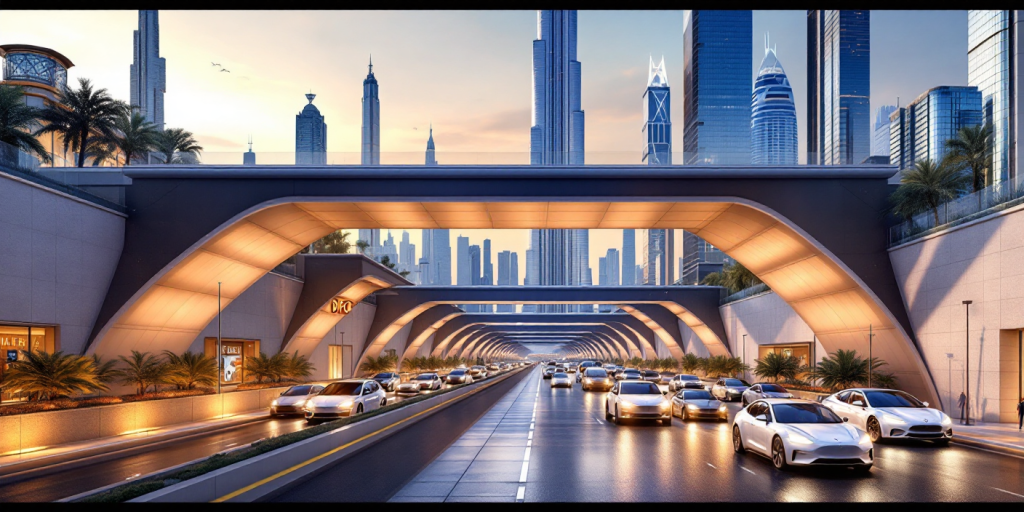
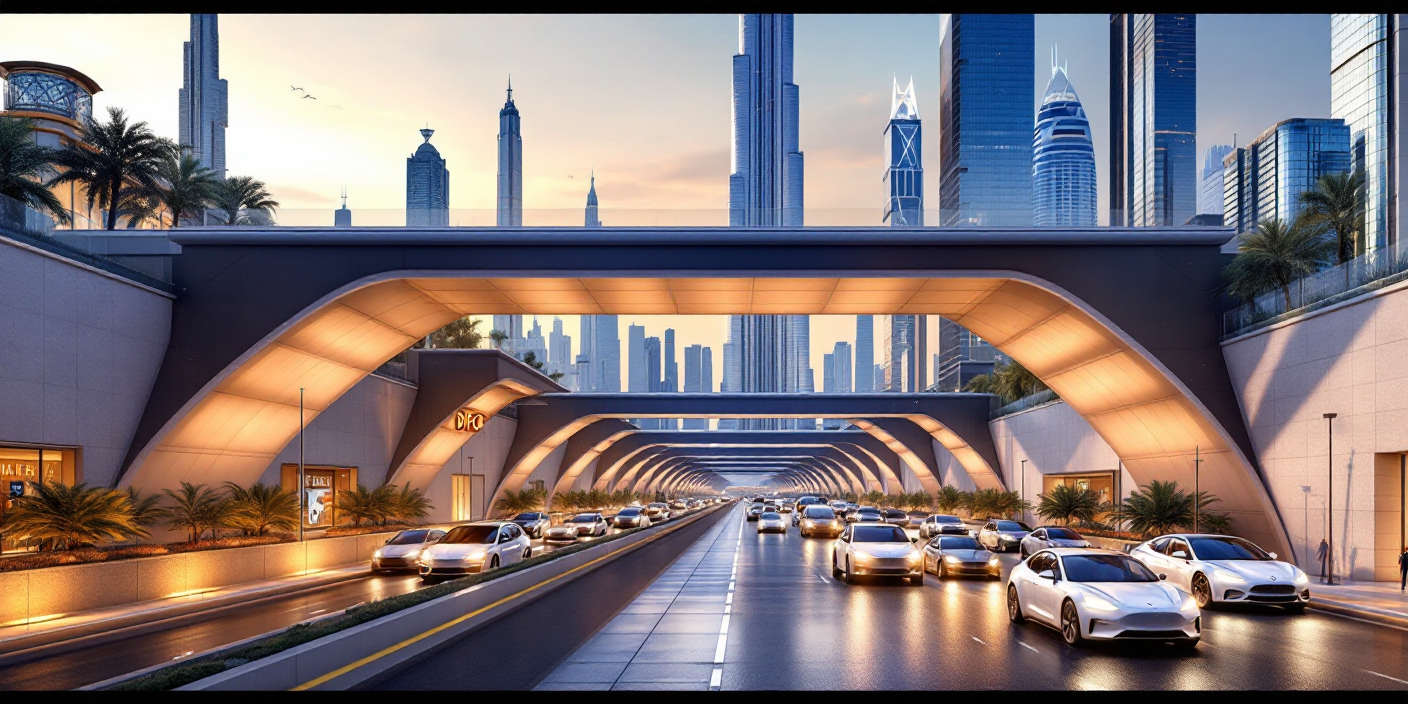
The Dubai Loop is an underground transport network being developed by Dubai’s Roads and Transport Authority in partnership with The Boring Company. The system will use electric vehicles operating inside dedicated tunnels, moving passengers directly between stations without traditional road congestion.
The first phase is expected to cover approximately 6 to 7 kilometres with four initial stations linking DIFC and Downtown. Future expansion is expected to extend further into Business Bay and other commercial corridors.
The core objective is simple. Reduce congestion on major routes such as Sheikh Zayed Road and Financial Centre Road while improving first and last mile connectivity between business, retail and residential hubs.
Who officiated the plan?
The project was officially presented by Mattar Al Tayer, Director General and Chairman of the Roads and Transport Authority. The announcement aligns with Dubai’s broader D33 economic agenda, which aims to double the size of the economy over the next decade.
Major UAE publications have highlighted that the Loop is not positioned as a replacement for the Metro. It is designed as a complementary high speed connector between dense urban districts where travel time has become a friction point.
Current progress and expected timeline
As reported by Arabian Business and Khaleej Times, the project is currently in structured planning and technical coordination phases. Phase one is targeted within the next few years, subject to regulatory approvals and engineering sequencing.
While final completion dates will depend on implementation milestones, the intention is clear. Deliver a functioning pilot that demonstrates speed, efficiency and scalability before expanding the network further.
Dubai has historically delivered large scale infrastructure on schedule once construction formally begins. Investors typically monitor the early development stage closely, as pricing shifts often begin well before completion.
Why this matters for real estate
Infrastructure has consistently been one of the strongest drivers of capital growth in Dubai. The launch of the Dubai Metro created measurable price uplifts around stations. The same pattern occurred around tram corridors and major road expansions.
The Dubai Loop introduces something more powerful. Time compression.
When a 30 minute commute becomes three minutes, perceived distance changes. Districts that felt separate begin to function as one connected core.
DIFC
Dubai International Financial Centre is already the region’s leading financial hub. Faster underground connectivity to Downtown and Dubai Mall strengthens its position further.
Executives gain immediate access to hospitality and retail. Residential demand from finance professionals increases. Grade A office space becomes more attractive for multinational firms seeking efficient access between commercial and lifestyle zones.
Improved connectivity also supports higher rental stability in serviced apartments and premium residential towers within DIFC.
Downtown Dubai and Burj Khalifa
Downtown Dubai anchors luxury residential, retail and tourism. With direct underground access to DIFC, it becomes even more integrated into the daily routine of financial and corporate professionals.
Increased accessibility typically drives stronger footfall at Dubai Mall, higher hotel occupancy and sustained investor interest in branded and luxury residences. When mobility improves, premium districts tend to reinforce their pricing advantage.
Downtown is already established. The Loop strengthens its defensibility as the core lifestyle address of central Dubai.
Business Bay
Business Bay may experience the most significant upside in percentage terms. Positioned between DIFC and Downtown, it often trades at a price per square foot discount while offering comparable proximity.
Enhanced connectivity reduces that psychological pricing gap. Office occupiers may consider Business Bay more seriously if commute times to DIFC are negligible. Residential tenants benefit from easier access to both financial and retail hubs.
For investors, this creates a clear value narrative. Entry prices remain relatively competitive compared to Downtown, while infrastructure support improves long term capital appreciation potential.
The broader economic signal
Beyond travel time, the Dubai Loop sends a strategic message. Dubai continues to invest in infrastructure that supports business expansion, talent attraction and urban density.
Global investors pay attention to mobility projects because they indicate confidence in sustained growth. Large scale underground transport requires long term planning and capital commitment. That commitment strengthens market sentiment.
Real estate markets respond to confidence as much as they respond to supply and demand fundamentals.
Conclusion
The Dubai Loop is more than a transport upgrade. It is a structural enhancement to central Dubai’s urban ecosystem. By reducing commute times between DIFC, Downtown, Burj Khalifa, Dubai Mall and Business Bay to just minutes, the city effectively expands its prime core without expanding geographic boundaries.
For property investors and end users, the implications are clear. Improved connectivity increases demand resilience, strengthens rental performance and supports long term price growth in station adjacent assets.
Infrastructure cycles in Dubai have historically rewarded early movers. As planning progresses, market participants will begin pricing in the connectivity advantage well before the first passenger travels underground.
If you would like, I can now refine this into a developer facing version, an investor advisory article, or a LinkedIn authority piece tailored for decision makers.
Sources:
- Dubai Loop: First four stations revealed (The National)
- First 4 stations for Elon Musk’s Dubai Loop project revealed (Timeout Dubai)
- How Dubai Loop will reduce travel times (Khaleej Times)
- Dubai Loop explained: Why you can’t drive your own car in it (Gulf News)
- RTA details Dubai Loop tunnel project (RTA Dubai official news)